
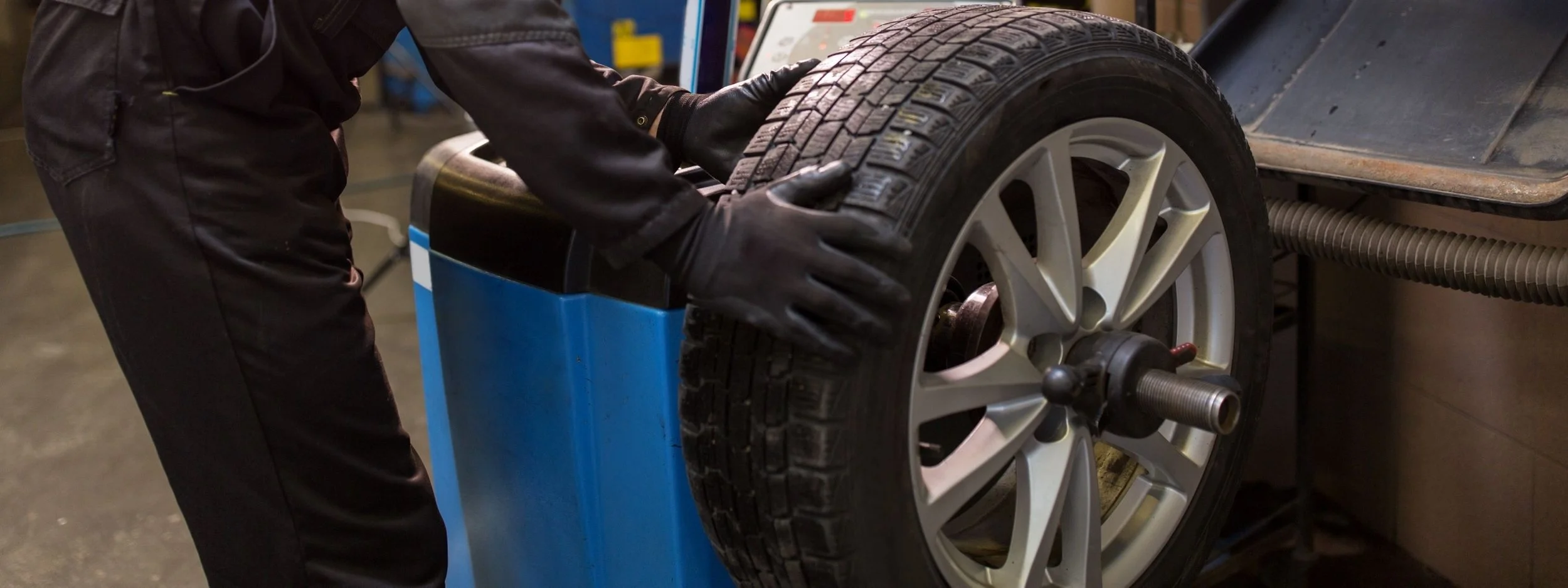
Tire Rotation & Balance
Keep Your Tires Wearing Evenly with Professional Tire Rotation & Balance
Regular tire rotation and wheel balancing are important parts of preventive vehicle maintenance. Your tires do not always wear evenly, and improper balance can cause vibration, uneven tread wear, and unnecessary stress on suspension and steering components.
At Waterside Auto Repair in Richmond, TX, we provide professional tire rotation and balancing services for cars, SUVs, and trucks. Our technicians inspect your tires, rotate them according to your vehicle's recommended pattern, and use professional balancing equipment to identify and correct weight imbalances. Keeping your tires properly rotated and balanced can help improve ride comfort, maintain predictable handling, maximize tread life, and help you get the most value from your tires.
Uneven tire tread wear
Steering wheel vibration
Vibration through the seat or floor
Vehicle vibration at highway speeds
Signs Your Tires May Need Rotation or Balancing
Steering wheel shaking
Excessive tire noise
Tires wearing faster on one axle
Vehicle pulling slightly to one side
New tires were recently installed
You have reached the recommended tire rotation interval
Important: Rotation vs. Balance
Tire rotation and wheel balancing solve different problems.
Tire rotation changes the tires' positions on the vehicle to promote more even tread wear.
Wheel balancing corrects weight differences between the tire and wheel assembly that can cause vibration.
Both services can be performed together when appropriate.
Regular tire maintenance can help provide:
✔ More even tire wear
✔ Longer tire life
✔ Smoother ride quality
✔ Reduced steering-wheel vibration
✔ Improved handling
✔ Better driving comfort
✔ Reduced stress on suspension components
✔ Better value from your tires
✔ Early detection of tire problems
Benefits of Tire Rotation & Balance
Related Auto Services
🏁
Related Auto Services 🏁
FAQ
-
Many manufacturers recommend tire rotation approximately every 5,000–8,000 miles, but the correct interval depends on your vehicle, tires, and driving conditions. Always check your owner's manual and tire manufacturer's recommendations.
-
Common signs include steering-wheel vibration, vibration through the seat or floor, especially at highway speeds, and uneven tire wear.
-
No. Tire rotation changes the position of the tires on the vehicle to promote even wear. Balancing corrects weight differences in the wheel and tire assembly to reduce vibration.
-
It can be convenient to combine these services, but the intervals aren't necessarily identical. If your vehicle is due for both services, performing them during the same visit can make maintenance easier.
-
Yes. New tires should be properly balanced when mounted onto wheels. Balancing helps prevent vibration and promotes smooth operation.
-
Usually not. Pulling can be caused by tire pressure differences, tire wear, alignment problems, or suspension issues. A proper inspection can determine the cause.
-
Rotation can help prevent or reduce future uneven wear, but it cannot reverse tread that has already worn unevenly. Severe uneven wear may indicate an alignment, suspension, inflation, or tire problem.