
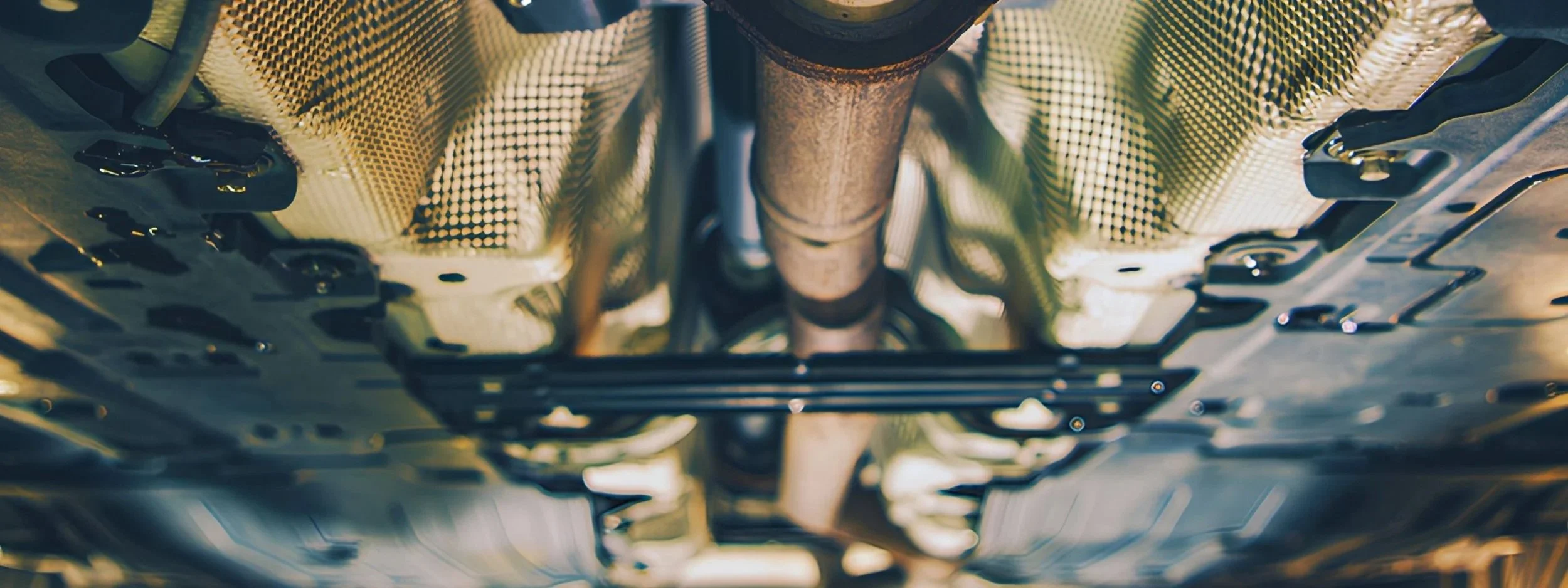
Catalytic Converters
Restore Proper Emissions Performance with Professional Catalytic Converter Service
Your catalytic converter plays an important role in your vehicle's emissions system. It converts harmful exhaust gases into less harmful emissions before they leave the vehicle's exhaust system. When a catalytic converter becomes clogged, damaged, contaminated, or fails to operate properly, it can trigger a Check Engine Light and affect engine performance.
At Waterside Auto Repair, we provide professional catalytic converter inspection, diagnosis, and replacement services for cars, SUVs, and trucks. Our technicians don't automatically replace a catalytic converter simply because a diagnostic code is present. We investigate the underlying cause to determine whether the converter itself has failed or whether another engine or emissions problem is responsible. This approach helps prevent unnecessary repairs and ensures we address the underlying issue.
Signs of a Bad Catalytic Converter
Check Engine Light
Reduced engine performance
Sluggish acceleration
Loss of power, especially under load
Poor fuel economy
Engine running hotter than normal
Rotten-egg or sulfur-like exhaust odor
Rattling underneath the vehicle
Dark or unusual exhaust
Difficulty maintaining highway speed
Engine misfires
Failed emissions testing
Exhaust restriction
Don't Ignore a Check Engine Light: A Check Engine Light does not automatically mean your catalytic converter needs to be replaced. Problems involving the engine, oxygen sensors, fuel system, ignition system, or exhaust system can produce similar diagnostic codes. That's why proper diagnosis is important before replacing an expensive emissions component.
Our Catalytic Converter Diagnostic & Repair Process
1. Initial Vehicle Inspection
We begin by reviewing your symptoms and checking for visible signs of exhaust or emissions-system problems.
Our technicians look for: Exhaust leaks, Physical damage, Heat damage, Loose components, Corrosion, Signs of overheating, and previous repairs

2. Diagnostic Scan
We use the vehicle's onboard diagnostic system to identify stored trouble codes and relevant system information.
Catalytic converter-related codes can provide useful information, but they do not, by themselves, prove the converter has failed.
3. Engine Performance Evaluation
Because engine problems can damage a catalytic converter, we investigate related systems.
Depending on the vehicle and symptoms, this may include checking Spark plugs, the Ignition system, the Fuel system, Oxygen sensors, the Air/fuel mixture, Engine misfires, the Exhaust system, and other emissions components.
4. Catalytic Converter Evaluation
Our technicians evaluate the converter for signs of restriction, Overheating, Physical damage, Internal deterioration, Contamination, and reduced efficiency.
Where appropriate, additional testing can help determine whether the converter is functioning within the expected parameters.
5. Determine the Cause
A catalytic converter can fail because of an underlying engine or emissions problem.
Possible causes include: Misfires, Excessive fuel entering the exhaust, Oil contamination, Coolant contamination, Incorrect air/fuel mixture, Physical damage, age, and normal deterioration.
Identifying the underlying cause matters because replacing the converter without addressing the original problem can lead to another failure.
6. Catalytic Converter Replacement
If the converter has been confirmed to be defective and replacement is necessary, we install an appropriate replacement component for the vehicle.
The replacement must meet applicable vehicle and emissions requirements.
FAQ
-
A catalytic converter is part of the vehicle's exhaust and emissions system. It helps convert certain harmful exhaust gases into less harmful emissions before they exit the vehicle.
-
Common symptoms include a Check Engine Light, reduced acceleration, loss of power, poor fuel economy, unusual exhaust odors, rattling noises, or an emissions test failure.
However, these symptoms can also be caused by other vehicle problems, so proper diagnosis is important.
-
No. A Check Engine Light can be triggered by many different problems.
Certain diagnostic codes may indicate that the emissions system is not operating as expected, but additional testing is needed to determine whether the catalytic converter itself has failed.
-
Yes. A severely restricted catalytic converter can restrict exhaust flow and cause reduced engine performance, sluggish acceleration, or significant loss of power.
-
Catalytic converters can fail because of age, physical damage, overheating, contamination, or underlying engine problems such as misfires or an incorrect air/fuel mixture.
-
A severely restricted exhaust system can affect engine performance and operating conditions. More importantly, an unresolved engine problem that damages the catalytic converter can keep causing problems if you don't repair the underlying cause.
-
It depends on the condition and cause of the problem. Cleaning is not a universal solution for a physically damaged, melted, contaminated, or otherwise failed converter.
A proper inspection should determine whether the converter can remain in service.
-
No single mileage interval applies to every vehicle. Catalytic converter life depends on vehicle design, operating conditions, maintenance, and whether underlying engine problems are present.
-
In many cases, a failed catalytic converter itself is replaced rather than repaired internally. However, the surrounding exhaust system and the underlying cause of failure may be repairable.