
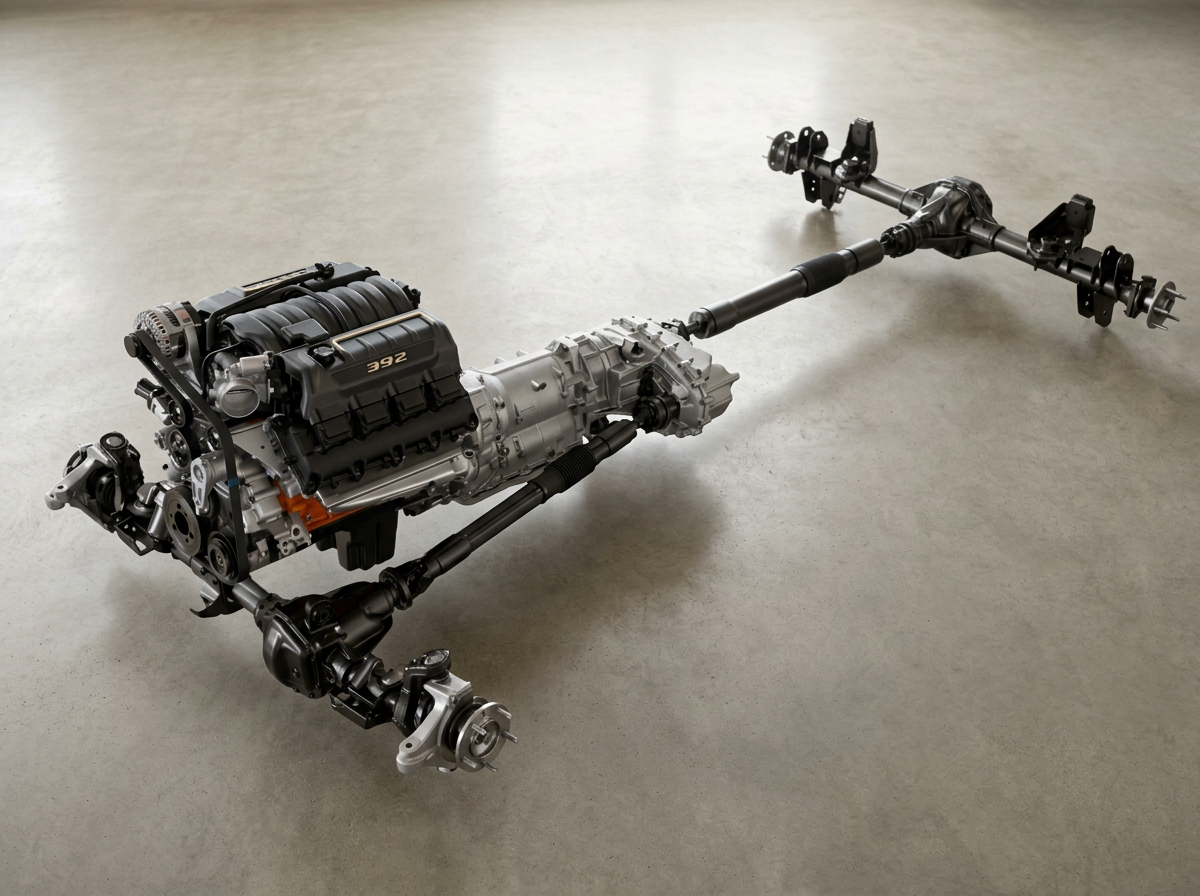
Drivetrain
Keep Your Vehicle's Power Moving with Professional Drivetrain Repair
Your vehicle's drivetrain transfers power from the engine and transmission to the wheels. It includes several interconnected components, such as the differential, driveshaft, axles, CV joints, and related parts. When one of these components wears out or becomes damaged, you may notice unusual noises, vibrations, fluid leaks, or changes in how your vehicle accelerates and handles.
At Waterside Auto Repair, we provide professional drivetrain inspection, maintenance, and repair for cars, SUVs, and trucks. Our technicians evaluate the drivetrain as a system to identify the source of the problem before recommending repairs. Whether you're hearing a clunk when accelerating, feeling vibration while driving, or noticing a fluid leak under your vehicle, we'll help you determine the cause and recommend the right service.
Signs You May Have a Drivetrain Problem
Clunking when accelerating or decelerating
Clicking noises while turning
Whining or humming while driving
Grinding noises
Vibrations that increase with vehicle speed
Shuddering during acceleration
Difficulty transferring power to the wheels
Vehicle jerking during acceleration
Fluid leaking underneath the vehicle
Grease around a CV axle or boot
Difficulty turning or unusual handling
Unusual noises coming from underneath the vehicle
Reduced driving performance
Four-wheel-drive or all-wheel-drive system problems
Important: Some drivetrain noises can be difficult to identify because several components operate together. A professional inspection can help pinpoint the source.
Benefits of Proper Drivetrain Maintenance
Proper drivetrain maintenance can help:
✔ Maintain efficient power transfer
✔ Reduce excessive component wear
✔ Identify fluid leaks early
✔ Reduce vibration and unusual noises
✔ Protect drivetrain components
✔ Maintain smooth acceleration
✔ Support reliable vehicle operation
✔ Help prevent more extensive repairs
✔ Extend component service life
Related Auto Services
🏁
Related Auto Services 🏁
FAQ
-
The drivetrain is the group of components that transfers power from the engine and transmission to the vehicle's wheels. Depending on the vehicle, it can include the transmission, driveshaft, differential, axles, CV joints, and related components.
-
Common problems include worn CV joints, damaged CV boots, driveshaft issues, worn universal joints, differential problems, fluid leaks, and worn drivetrain components.
-
A clunk during acceleration or deceleration can have several causes, including worn drivetrain components, engine or transmission mounts, driveshaft components, or suspension parts. An inspection is necessary to determine the source.
-
Acceleration-related vibration can stem from drivetrain components such as a driveshaft, CV axle, or joint, but tire, wheel, suspension, and engine problems can produce similar symptoms.
-
A repetitive clicking or popping sound when turning can indicate a worn CV joint, especially on vehicles with front-wheel drive or independent suspension.
-
Yes. The differential is an important drivetrain component. It transfers power to the wheels while allowing the wheels to rotate at different speeds when turning.
-
Transmission repair focuses specifically on the transmission. Drivetrain repair can involve several components that transfer power from the transmission to the wheels, including driveshafts, differentials, axles, and CV joints.
Waterside Auto Repair should diagnose the vehicle to determine which system is responsible for the problem.
-
Low or contaminated differential fluid can reduce lubrication and increase wear. If you notice a differential fluid leak or unusual drivetrain noise, we recommend an inspection.
-
It depends on the problem and how severe it is. Some drivetrain issues may worsen with continued driving and could eventually affect vehicle control or leave the vehicle unable to move.
If you notice severe vibration, grinding, major fluid leaks, or a sudden change in vehicle operation, have the vehicle inspected promptly.