
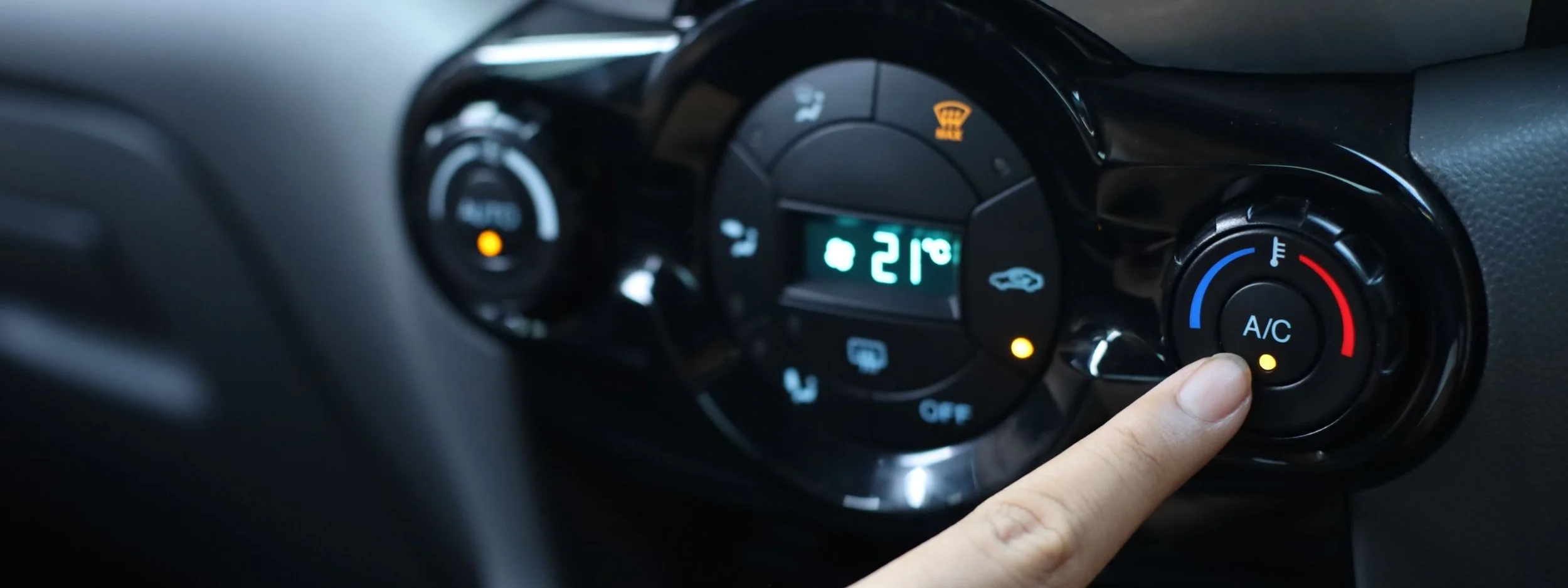
AC & Heating System
Keep Your Vehicle Comfortable Year-Round with Professional AC & Heating Service
A properly working climate control system helps keep you comfortable and maintain clear visibility while driving. Whether your vehicle is blowing warm air when you expect cold air, failing to produce enough heat, or experiencing unusual noises or odors, the problem may involve several different components of the automotive HVAC system.
At Waterside Auto Repair, we provide professional AC and heating system inspection and repair for cars, SUVs, and trucks. Our technicians diagnose the cause of climate-control problems before recommending repairs. We inspect components such as the compressor, condenser, blower motor, heater core, hoses, controls, and related electrical systems. Whether you need air conditioning service during a hot Texas summer or heating repair during cooler weather, we'll help identify the problem and recommend the appropriate solution.
Signs Your AC or Heating System May Need Service
Heater takes too long to produce warm air
Unusual noises when the blower or AC is operating
Strange or musty odors from the vents
Water leaking inside the vehicle
Fogging or poor windshield defrost performance
Air conditioning is blowing warm air
Heater is blowing cold air
Airflow is weak
Temperature changes inconsistently
Air conditioning takes too long to cool the vehicle.
Blower fan does not work
Certain fan speeds do not work
AC compressor makes unusual noises
Refrigerant appears to be leaking
Climate-control controls are not responding properly
Important: Some symptoms may stem from simple maintenance issues, while others may indicate a component failure that requires diagnosis and repair.
Benefits of Proper AC & Heating Maintenance
A properly maintained HVAC system can help provide:
✔ More comfortable driving
✔ Better airflow
✔ Reliable cooling during hot weather
✔ Reliable heating during colder weather
✔ Better windshield defrost performance
✔ Early detection of refrigerant leaks
✔ Reduced risk of unexpected HVAC failure
✔ Proper operation of blower and climate controls
✔ Better overall driving comfort
Related Auto Services
🏁
Related Auto Services 🏁
-
Warm air can result from low refrigerant, a refrigerant leak, compressor problems, condenser issues, electrical faults, or HVAC control problems. A proper inspection is necessary to identify the cause.
-
A heater that isn't producing warm air can be caused by low coolant, a thermostat issue, heater-core problems, restricted coolant flow, HVAC control issues, or other problems. Because the cooling and heating systems are closely related, diagnosis is important.
-
Not necessarily. Low refrigerant can indicate a leak. Adding refrigerant without finding the source may only provide temporary improvement.
-
Noises can originate from several components, including the AC compressor, blower motor, belt, or other HVAC components. The type and location of the noise can help determine the cause.
-
Weak airflow can result from a restricted cabin air filter, blower motor problem, blower resistor or control issue, blocked ducts, or another HVAC problem.
-
Musty or unpleasant odors can result from moisture, microbial growth, a dirty cabin air filter, or other HVAC-related conditions. An inspection can determine the source.
-
Yes. The HVAC system plays an important role in defrosting and clearing the windshield. If the system doesn't produce the correct airflow or temperature, windshield visibility can suffer.
-
There isn't a universal service interval for every vehicle. Your AC system generally doesn't require routine refrigerant replacement simply because time has passed. However, periodic inspection and prompt attention to changes in performance can help identify problems early.
FAQ